
When the Upper Limb Disconnects from the Trunk: Grade 3 Acromioclavicular Joint Separation with Coracoclavicular Ligament Rupture (Rockwood Type III
Clinical Presentation
A 20-year-old male presented with pain and swelling over the superior aspect of the right shoulder following a motorcycle accident.
Imaging Findings
Plain Radiography (AP Shoulder)
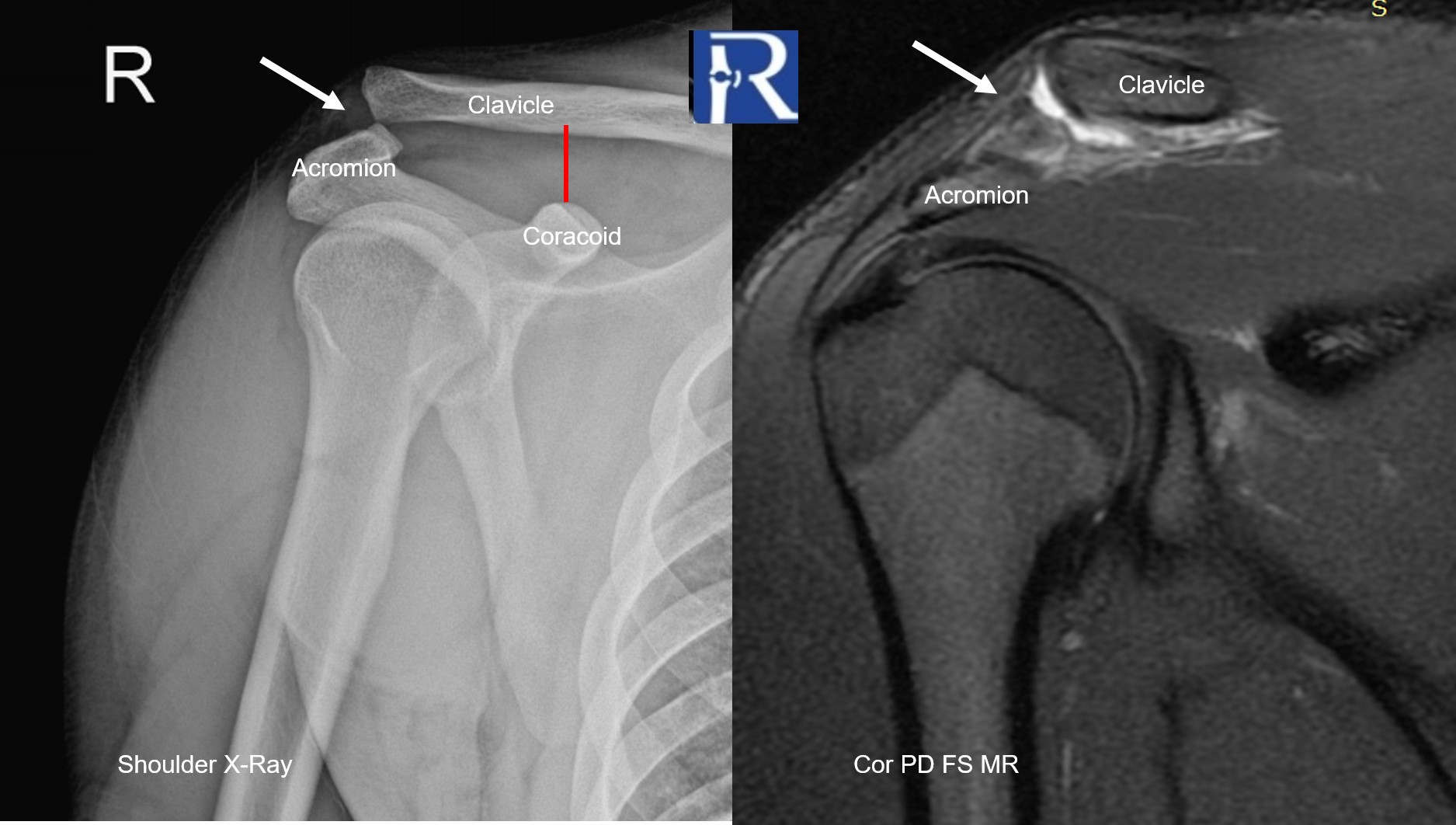
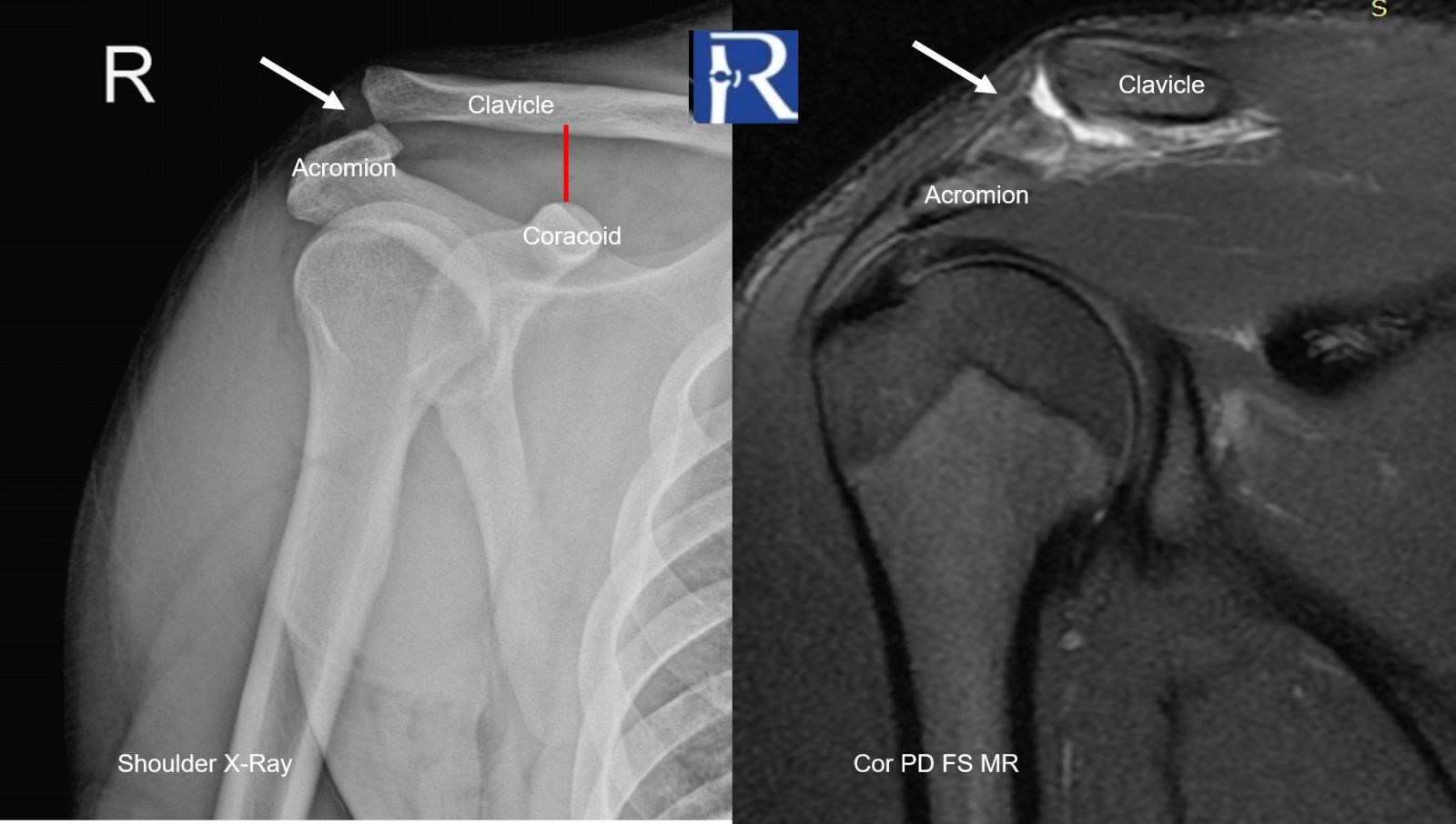
- Superior displacement of the clavicle relative to the acromion (white arrow)
- Inferior cortical margin of the clavicle overriding the superior cortex of the acromion (white arrow)
- Increased coracoclavicular (CC) distance measuring approximately 20 mm (red line)
→ Findings are consistent with acromioclavicular joint separation
Magnetic Resonance Imaging (MRI)
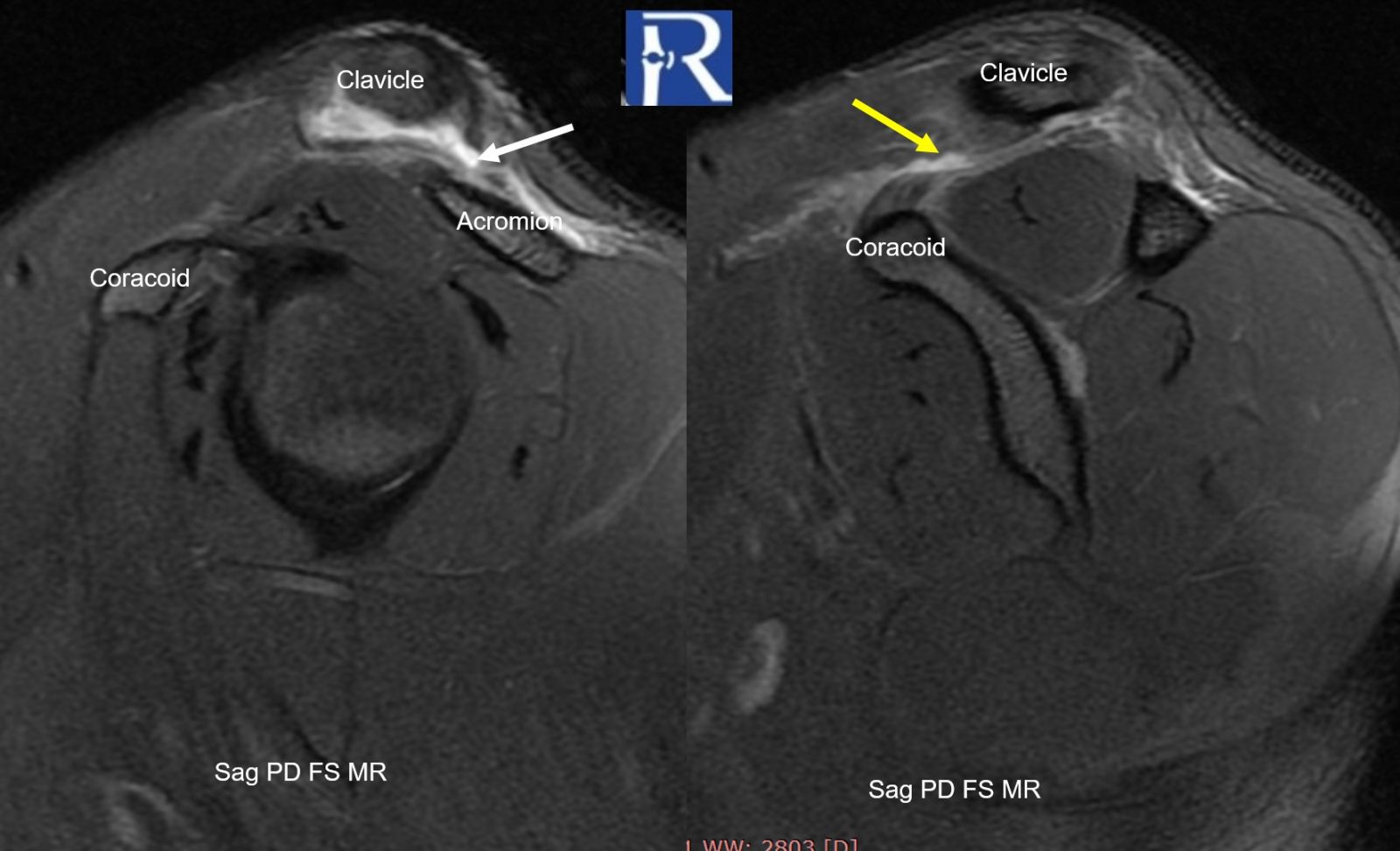
- Full-thickness tear of the acromioclavicular ligament (white arrow)
- Complete disruption of the coracoclavicular ligament (yellow arrow)
- Fluid/hemorrhagic signal within the AC joint (white arrow)
- Marked periarticular edema (asterisk * optional)
- Persistent widening of the coracoclavicular distance (~20 mm) (red line)
→ MRI confirms complete ligamentous disruption consistent with Grade 3 injury
Diagnosis
Grade 3 Acromioclavicular Joint Separation
Teaching Point (Key Concept)
The coracoclavicular ligament represents the primary structural linkage between the upper extremity and the axial skeleton.
> Functionally, this ligament acts as the “suspensory bridge” of the upper limb
>Yellow arrow = coracoclavicular ligament disruption → loss of this bridge
When disrupted:
- The clavicle remains attached to the trunk
- The upper limb loses its structural anchorage
- A true biomechanical dissociation occurs
Rockwood Classification of AC Joint Injury (Clinical Context)
Acromioclavicular joint injuries are most commonly classified using the Rockwood classification, which reflects the extent of ligamentous injury and displacement:
- Type I: AC ligament sprain, CC ligament intact
- Type II: AC ligament torn, CC ligament intact/partial
- Type III:
- Complete rupture of both AC and CC ligaments (yellow arrow)
- Vertical instability with clavicular elevation (white arrow)
- Type IV: Posterior displacement of the clavicle
- Type V: Marked superior displacement (severe CC widening)
- Type VI: Inferior displacement of the clavicle (rare)
Radiologic Classification Insight
Grade (Rockwood Type) 2
- CC ligament: intact or partially torn
- Mild elevation
- Conservative treatment
Grade (Rockwood Type) 3
- Complete CC ligament rupture (yellow arrow)
- Clavicle overrides acromion (white arrow)
- Loss of upper limb–trunk mechanical linkage
- Often surgical consideration
- Pearl & Pitfall
- Pearl
- White arrow (cortical override) = strong indicator of complete CC ligament rupture
- Pitfall
- Do not rely only on the red line (CC distance)
→ Always assess displacement pattern (especially posterior, Type IV) - Take-Home Message
- > Yellow arrow matters most.
>Because it represents the only true anatomical bridge between limb and trunk.
> In Rockwood Type 3 injury, this bridge is completely lost.
>Therefore, this is not just a joint injury — it is a functional disconnection of the upper extremity from the body.

0 COMMENTS
These issues are no comments yet. Write the first comment...